MacBook Pro 16-inch (M5 Max) vs MacBook Pro 16-inch OLED (M5 Max)
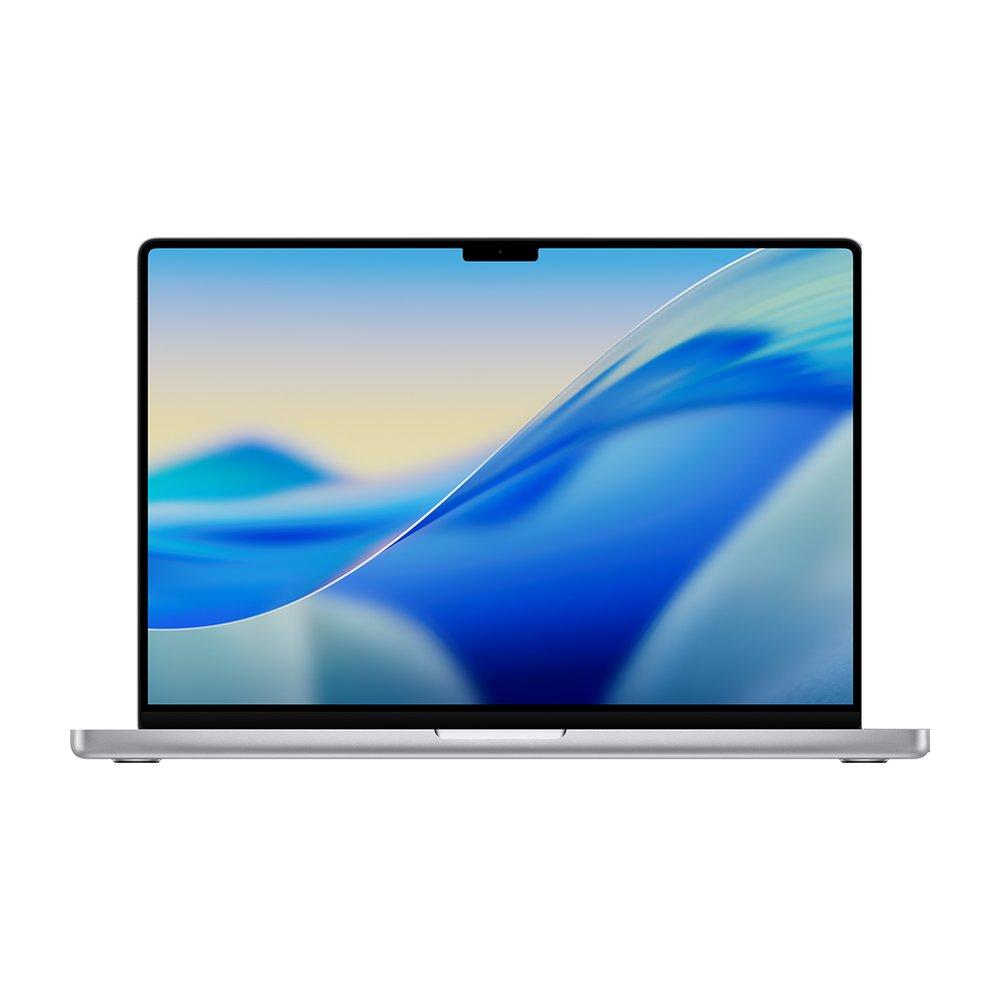
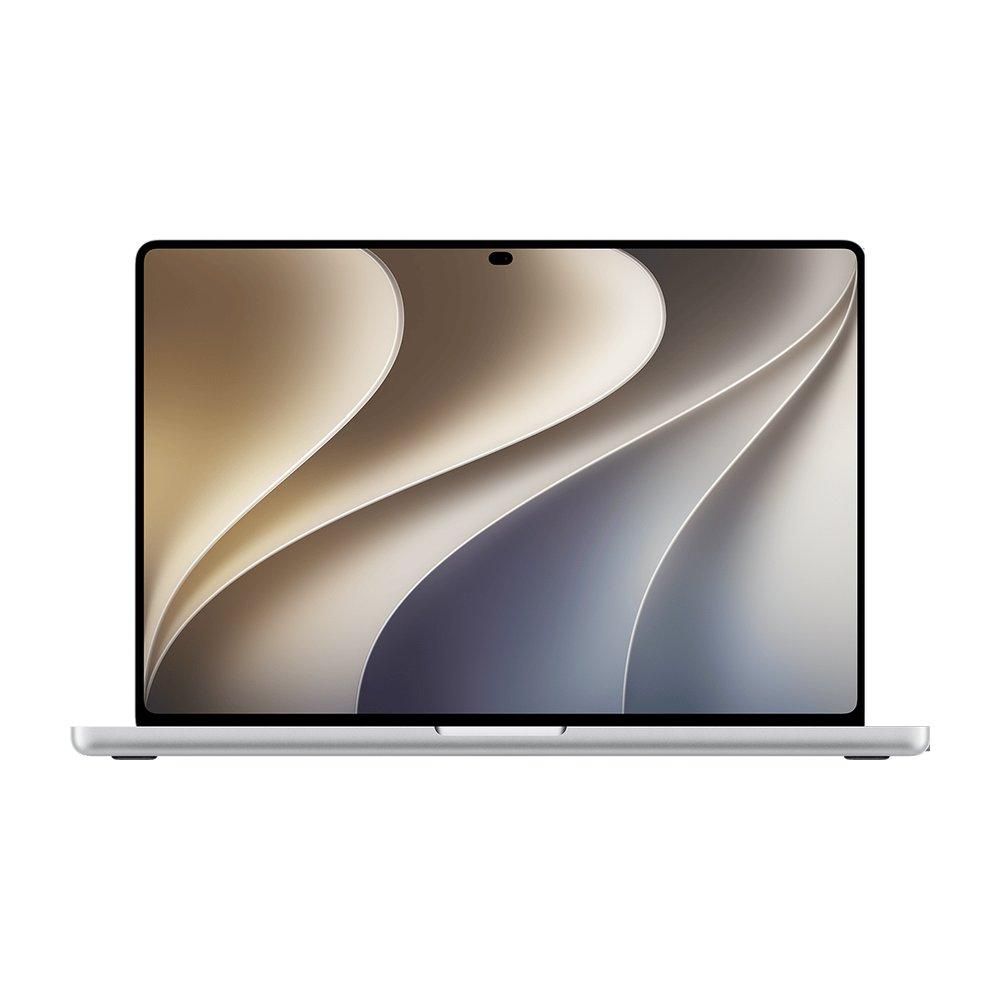
These are the same M5 Max MacBook Pro with two displays, and Apple sells both. The MacBook Pro 16-inch (M5 Max) has the mini-LED Liquid Retina XDR panel; the MacBook Pro 16-inch OLED (M5 Max), for about $1,060 more, has a tandem OLED touchscreen with a Dynamic Island, in a body 0.6 lb lighter. The chip, memory options and ports are the same, so the price buys the display, touch and weight, never speed. Pay it for HDR, color and photo work or daily carrying; otherwise the MacBook Pro 16-inch (M5 Max), or the same money spent on memory, is the better buy.
Same chip, same speed. Pay the $1,060 for the MacBook Pro 16-inch OLED (M5 Max)'s OLED touchscreen and lighter body if you grade color, edit HDR or carry it daily; otherwise the MacBook Pro 16-inch (M5 Max) is the smarter buy.
Which is right for you
- You want to spend less: it starts about $1,060 cheaper.
- You carry it daily: it is lighter.
- You grade color or HDR, or want touch: the OLED touchscreen has true blacks, a brighter HDR peak and a Dynamic Island.
How they differ, point by point
Each dimension lined up, with the edge marked where there is one. A check is not a blanket win; it is the better fit for that one thing.
| Dimension | MacBook Pro 16-inch (M5 Max) | MacBook Pro 16-inch OLED (M5 Max) |
|---|---|---|
| Performance EvenBoth run the M5 Max. At a matched configuration they perform the same; any real gap comes from cooling under sustained load or the exact GPU and memory you pick, not the chip. | 18-core CPU (6 super + 12 performance) | 18-core CPU (6 super + 12 performance) |
| DisplayThe MacBook Pro 16-inch OLED (M5 Max) has a PROLED XDR (tandem OLED) touchscreen: per-pixel light with true blacks and no blooming and peaks at 2,000 nits for HDR against 1,600, plus a Dynamic Island in place of the notch. The MacBook Pro 16-inch (M5 Max)'s mini-LED Liquid Retina XDR panel is excellent for text, code and most video; the OLED earns its place for HDR grading, color and photo work, and touch. | 16.2" XDR · 120Hz | 16.3" OLED touch · 120Hz |
| PortabilityThe MacBook Pro 16-inch OLED (M5 Max) is 0.6 lb lighter and easier to carry daily; the MacBook Pro 16-inch (M5 Max) trades that for its mini-LED display's lower price. If it lives on a desk, weight barely matters; if it commutes, it does. | 4.7 lb · 16.2" | 4.1 lb · 16.3" |
| Max memory EvenBoth configure to the same 128GB of unified memory, which is not upgradeable later, so pick the right amount up front. | 128GB | 128GB |
| Price fromThe MacBook Pro 16-inch (M5 Max) starts about $1,060 less. The question is whether the MacBook Pro 16-inch OLED (M5 Max)'s advantages are worth that gap for how you actually work. | $3,739 | $4,799 |
Is now a good time to buy each?
The same buy-now-or-wait read we run on every model, for both sides at once, from the tracked price and Apple's refresh cadence.
The MacBook Pro 16-inch (M5 Max) is the current generation (M5 Max, 2026). Apple announced the MacBook Pro with PROLED XDR Display (OLED touchscreen) on Oct 28, 2026; it has been on sale since Nov 6, 2026. Apple keeps selling the mini-LED models at the same prices, and the OLED touchscreen model with the same chip costs exactly $400 more for the same memory and storage, so there is nothing faster to wait for: the choice is the OLED display, touch and a lighter body against $400. We have tracked the cheapest offer's price since Nov 14, 2026; check back as the record builds for a firmer buy or wait call.
OLED MacBook Pro: prices and how it compares
- Cheapest tracked
- $3,200 at ItsWorthMore
- Tracked low
- $3,200
- Condition
- Refurbished
- Sold alongside
- OLED MacBook Pro, announced
- Generation
- Current
Price tracked since Nov 14, 2026. Judged from the tracked price, Apple's refresh cadence and any announced or reported successor. How we judge this.
The MacBook Pro 16-inch OLED (M5 Max) is the current generation (M5 Max, 2026). Apple refreshes the MacBook Pro line roughly every 13 months, so a successor is not imminent and buying now gets you the latest chip. We have tracked the cheapest offer's price since Nov 13, 2026; check back as the record builds for a firmer buy or wait call.
- Cheapest tracked
- $4,799 at Abt
- Tracked low
- $4,799
- Condition
- New
- Generation
- Current
Price tracked since Nov 13, 2026. Judged from the tracked price, Apple's refresh cadence and any announced or reported successor. How we judge this.
Full specifications, side by side
Every spec lined up. Highlighted rows are where the two differ, and each figure links to a reference showing every MacBook that shares it.
| Spec | MacBook Pro 16-inch (M5 Max) | MacBook Pro 16-inch OLED (M5 Max) |
|---|---|---|
| Price from | $3,739 | $4,799 |
| Chip | M5 Max | M5 Max |
| CPU | 18-core CPU (6 super + 12 performance) | 18-core CPU (6 super + 12 performance) |
| GPU | 32–40-core GPU | 32–40-core GPU |
| Neural Engine | 16-core | 16-core |
| Memory | 36–128GB | 36–128GB |
| Storage | 2TB–8TB | 2TB–16TB |
| Display | 16.2-inch Liquid Retina XDR (mini-LED) | 16.3-inch PROLED XDR (tandem OLED), touchscreen |
| Resolution | 3456 × 2234 (254 ppi) | 3472 × 2266 (254 ppi) |
| Brightness | 1000 nits (1600 peak HDR) | 1000 nits (2000 peak HDR) |
| Refresh | ProMotion, up to 120Hz | ProMotion, up to 120Hz |
| Ports | 3× Thunderbolt 5, HDMI 2.1, SDXC card slot, MagSafe 3, 3.5mm headphone jack | 3× Thunderbolt 5, HDMI, SDXC card slot, MagSafe 3, 3.5mm headphone jack |
| Wireless | Wi-Fi 7, Bluetooth 6 | Wi-Fi 7, Bluetooth 6 |
| Weight | 4.7 lb | 4.1 lb |
| Battery | Up to 22 hours | Up to 22 hours |
| Released | 2026 | 2026 |
In depth
Same M5 Max chip, two displays. What the OLED touchscreen adds for exactly $400 more.
Apple announced the MacBook Pro with PROLED XDR Display on October 28, 2026 and kept selling the mini-LED MacBook Pro beside it at unchanged prices. The 16-inch OLED model with the M5 Max starts at $4,799 and the mini-LED one at $4,399, and the gap is exactly $400 at every memory and storage size both sell, at list and with education pricing. The chip, memory options, ports and Apple's sustained-performance claim are the same, so the $400 buys the display, touch and a lighter body, never speed. The OLED model is also the only way to get 16TB of storage with the M5 Max.
The display is the difference. The mini-LED panel (16.2-inch, 3456 by 2234) reaches 1000 nits sustained and 1600 nits peak HDR. The tandem OLED panel (16.3-inch, 3472 by 2266) also sustains 1000 nits, peaks at 2000 nits for HDR and for SDR outdoors, has a 10,000,000:1 contrast ratio with true blacks and no blooming, covers Adobe RGB as well as P3, takes touch, and replaces the notch with a Dynamic Island. Both run ProMotion up to 120Hz, the OLED from as low as 10Hz. Apple says its display engine monitors and adapts each pixel's use over time to preserve image quality, its answer to the aging OLED panels are known for with static content.
The body is 0.6 lb lighter (4.1 lb against 4.7 lb) and nearly a millimeter thinner. Who should pay the $400: photographers, colorists and anyone grading HDR video, designers who print (Adobe RGB), and people who carry the machine daily. Who should not: anyone buying the M5 Max for compute (builds, local AI, 3D, data work), where $400 goes further as memory or storage, and anyone who needs a machine today, since the OLED model reaches customers from November 6 while the mini-LED one ships now.
MacBook Pro 16-inch (M5 Max) vs MacBook Pro 16-inch OLED (M5 Max): common questions
- What is the main difference between the MacBook Pro 16-inch (M5 Max) and the MacBook Pro 16-inch OLED (M5 Max)?
- They share the M5 Max and the same performance, memory options and ports; the difference is the display (a tandem OLED touchscreen with a Dynamic Island against a mini-LED Liquid Retina XDR panel), weight, and about $1,060 in price.
- Is the MacBook Pro 16-inch OLED (M5 Max) worth the extra $1,060 over the MacBook Pro 16-inch (M5 Max)?
- It is worth it if you regularly grade color or HDR video, edit photos for print, want a touchscreen, or carry the machine every day. For everyday use (web, office, coding, streaming) the MacBook Pro 16-inch (M5 Max) does the same job for less.
- Which is cheaper, the MacBook Pro 16-inch (M5 Max) or the MacBook Pro 16-inch OLED (M5 Max)?
- MacBook Pro 16-inch (M5 Max) starts at $3,739 and MacBook Pro 16-inch OLED (M5 Max) starts at $4,799 across the offers we track. Prices move, so confirm live at the seller.
- How much more does the 16-inch OLED MacBook Pro cost than the mini-LED model?
- Exactly $400 more for the same M5 Max chip, memory and storage, at list and with education pricing: from $4,799 against $4,399 at Apple.
- Is the OLED MacBook Pro faster than the mini-LED MacBook Pro?
- No. Both use the same M5 Max chip with the same memory options, and Apple says the redesigned thermal system keeps the same sustained performance. The OLED model differs in its display, touch, Dynamic Island, a lighter and thinner body, and speakers Apple says have 50 percent deeper bass.
- Does Apple still sell the mini-LED MacBook Pro?
- Yes. Apple kept selling the mini-LED MacBook Pro with M5 Max at unchanged prices after announcing the OLED models on October 28, 2026, from $4,399 for the 16-inch.
Related comparisons
See every MacBook comparison or browse all MacBook prices.